
Everyone’s Betting on AI to Solve the Physician Shortage —They’re Solving the Wrong Problem
This isn't a supply problem. It's a distribution problem. The physicians exist. The system just isn't getting them where they need to be.
This isn't a supply problem. It's a distribution problem. The physicians exist. The system just isn't getting them where they need to be.

The answer may lie in the specialty’s proactive adoption of digital tools and its commitment to patient-first strategies that reduce friction, modernize scheduling, and streamline access.


Discover the top AI-powered EAP providers for 2026. Compare platforms like Kyan Health and Spring Health on triage speed, global reach, and clinical quality to transform workforce wellbeing.

Since practices tend to build more flexibility into APPs’ schedules, they can efficiently expand patients’ access to care while allowing physicians to focus on more complex patients.

There’s always going to be a new AI tool promising to save healthcare, optimize a workflow, or save someone a few minutes a day. But before we chase every emerging use case, we should tackle the biggest, most expensive part of the system: labor optimization.


Scheduling software is helpful for wellness business owners in numerous ways. They get everything they need to create appointments, reschedule clients and track cancellations in one platform.

Contrary to fears of clinician replacement, AI’s near-term potential lies in complementing human expertise, particularly by handling behind-the-scenes tasks that improve efficiency and precision. Here’s where we might see the most impact.


We'll explore why the next era of payer performance will depend on building a trusted data foundation that connects people, providers, and relationships across the enterprise.

Health systems need to leverage new approaches to healthcare staffing to make sure patients receive the care they need, when and where they need it.

Shift flexibility is critical to nurse satisfaction.
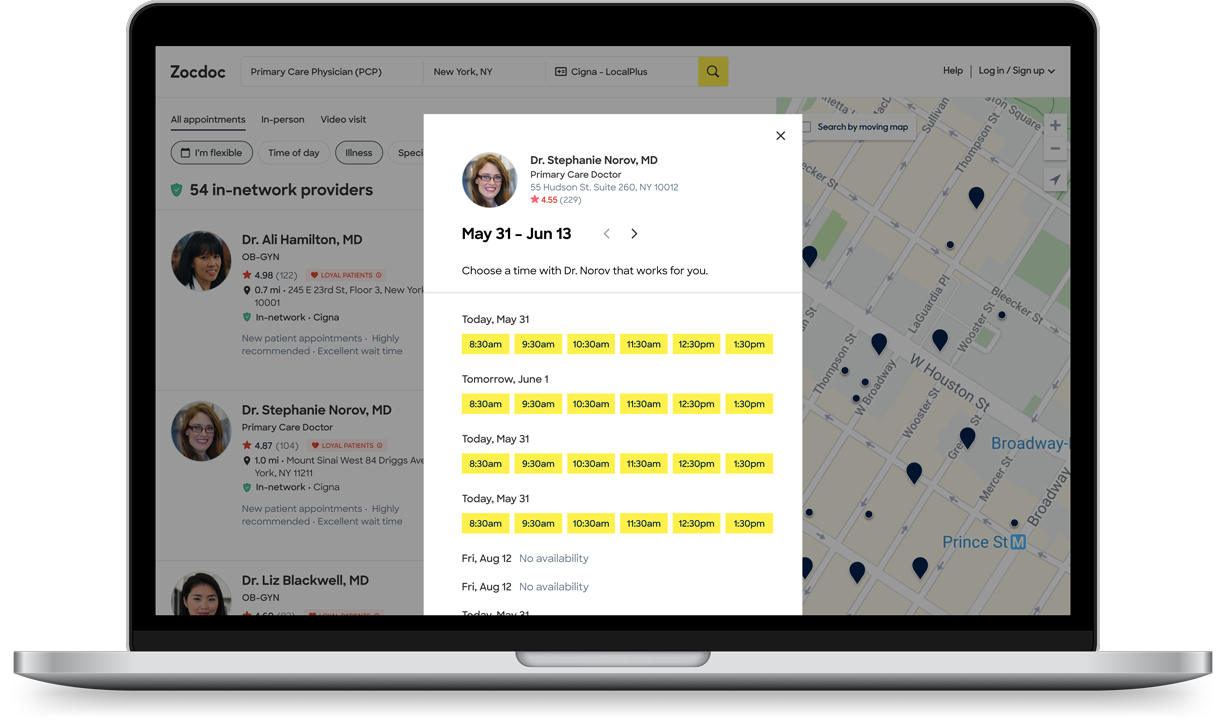
Zocdoc recently struck a partnership with Elation Health to increase patients' access to care. Now, any provider who uses Elation’s primary care-specific EHR can integrate their calendar into Zocdoc’s platform — meaning that the millions of patients who search for care via Zocdoc each month will have access to these providers’ real-time appointment availability.

Healthcare consumers are increasingly turning to the internet to research their care options, and provider and payer websites are among their top choices for information, according to a new survey of 1,000 U.S. adults. Over half of the respondents said they would use a provider or payer website to search for a new doctor.


By reducing administrative burden and redesigning workflows around human needs, it creates space for what matters most: connection between clinicians and patients.

The startup, which won a Pitch Perfect contest at MedCity INVEST Digital Health, offers a solution that integrates with EHRs to predict wait times in doctors' offices and texts patients in real time to let them know what to expect. This virtual waiting room can help increase efficiency and improve patient experience.

Though telehealth will continue to account for a large portion of healthcare IT budgets in 2021, there are other technology-based services driving provider interest. These range from cloud deployment to vaccine scheduling solutions as providers navigate the new landscape created by the Covid-19 pandemic.
A physician started a business to eliminate long appointment wait times. But when the pandemic hit, she found a new use for it in helping keep patients out of busy waiting rooms.
Beaumont Health's CIO Hans Keil spoke with MedCity News about the incident where an unknown user publicly shared a link to access its Covid-19 vaccination scheduling services, the safeguards the health system has put into place since and what his team's IT priorities are for the year ahead.

An unknown user publicly shared a link to access Beaumont's Epic-enabled vaccination scheduling services, which resulted in 2,700 people making unauthorized appointments for a Covid-19 vaccine. The Michigan-based health system had to shut down its vaccination scheduling services and cancel the appointments.